Articles
- Home
- Articles
Articles
Common conditions
How we address them with manual therapy, osteopathy, and physiotherapy at Kinésica.
 Upper back pain
Dorsalgia is pain in the mid/upper back. It often relates to sustained posture, thoracic stiffness and muscle overload.
Read→
Upper back pain
Dorsalgia is pain in the mid/upper back. It often relates to sustained posture, thoracic stiffness and muscle overload.
Read→
 Low back pain
 is one of the most common complaints. The goal is to understand triggers and restore mobility and strength without fear of movement.
Read→
Low back pain
Low back pain is one of the most common complaints. The goal is to understand triggers and restore mobility and strength without fear of movement.
Read→
 Neck pain
 is often linked to tension, stiffness and sustained posture. An integrated approach restores mobility and reduces recurrence.
Read→
Neck pain
Neck pain is often linked to tension, stiffness and sustained posture. An integrated approach restores mobility and reduces recurrence.
Read→
 Hyperkyphosis
 is an increased thoracic curve often associated with a rounded posture, upper back stiffness and discomfort.
Read→
Hyperkyphosis
Hyperkyphosis is an increased thoracic curve often associated with a rounded posture, upper back stiffness and discomfort.
Read→
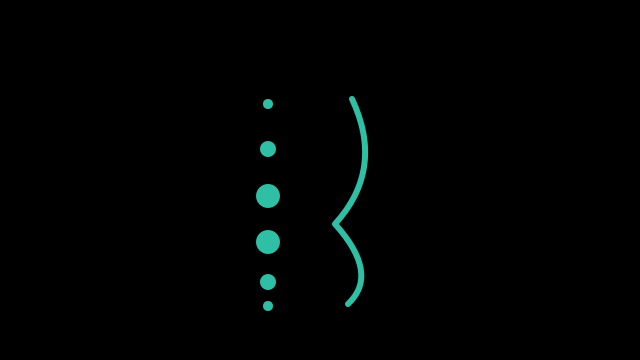 Hyperlordosis
 is an increased lumbar curve. It isn’t inherently bad, but it can be linked to overload and pain when control and mobility are limited.
Read→
Hyperlordosis
Hyperlordosis is an increased lumbar curve. It isn’t inherently bad, but it can be linked to overload and pain when control and mobility are limited.
Read→
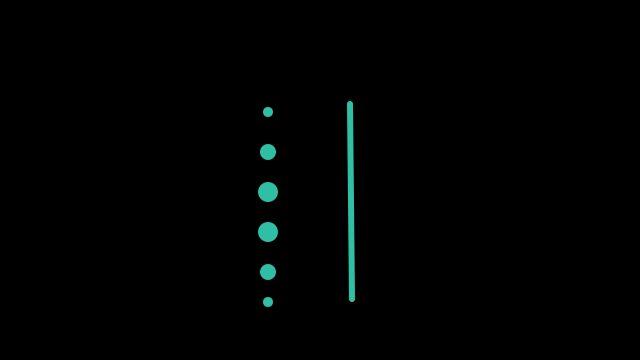 Flat back
A flatter thoracic curve is often linked to stiffness. Improving mobility and control helps reduce overload in the neck and low back.
Read→
Flat back
A flatter thoracic curve is often linked to stiffness. Improving mobility and control helps reduce overload in the neck and low back.
Read→
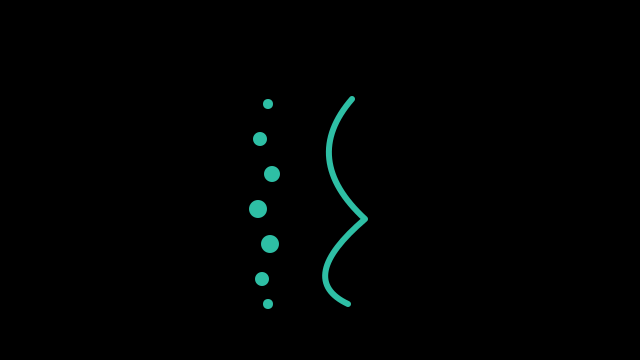 Scoliosis
 is a three-dimensional spinal curve. Physiotherapy focuses on mobility, strength and pain management in daily life.
Read→
Scoliosis
Scoliosis is a three-dimensional spinal curve. Physiotherapy focuses on mobility, strength and pain management in daily life.
Read→
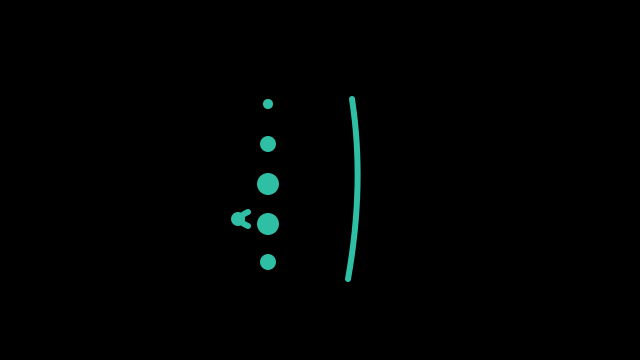 Disc herniation
A disc herniation may cause back or neck pain and sometimes symptoms down a limb. A progressive plan helps you regain function safely.
Read→
Disc herniation
A disc herniation may cause back or neck pain and sometimes symptoms down a limb. A progressive plan helps you regain function safely.
Read→
 Disc protrusion
A disc protrusion may be linked to pain and stiffness. With assessment and progression, function and confidence can improve significantly.
Read→
Disc protrusion
A disc protrusion may be linked to pain and stiffness. With assessment and progression, function and confidence can improve significantly.
Read→
 Sacroiliac pain
Pain near the sacrum and buttock may relate to the sacroiliac region and how load is distributed through pelvis, hip and spine.
Read→
Sacroiliac pain
Pain near the sacrum and buttock may relate to the sacroiliac region and how load is distributed through pelvis, hip and spine.
Read→
 Ciatalgia
 often feels like pain, burning or tingling down the leg. It doesn’t always mean a serious injury, but it does need a clear assessment.
Read→
Ciatalgia
Ciatalgia often feels like pain, burning or tingling down the leg. It doesn’t always mean a serious injury, but it does need a clear assessment.
Read→
 Radiculopathy
 can cause radiating pain, tingling or weakness. A precise assessment helps dose treatment without flaring symptoms.
Read→
Radiculopathy
Radiculopathy can cause radiating pain, tingling or weakness. A precise assessment helps dose treatment without flaring symptoms.
Read→
 Spinal flattening
Loss of cervical or lumbar lordosis stiffens the spine and can cause pain. Postural re-education helps restore mobility and control.
Read→
Spinal flattening
Loss of cervical or lumbar lordosis stiffens the spine and can cause pain. Postural re-education helps restore mobility and control.
Read→
 OA & arthritis
Joint wear and inflammation cause pain and stiffness. A graded movement plan helps maintain function and quality of life.
Read→
OA & arthritis
Joint wear and inflammation cause pain and stiffness. A graded movement plan helps maintain function and quality of life.
Read→
 Headache
s may originate from the neck, muscle tension or the jaw. An integrated approach helps reduce both intensity and frequency.
Read→
Neck pain
Neck pain is often linked to tension, stiffness and sustained posture. An integrated approach restores mobility and reduces recurrence.
Read→
Headache
Headaches may originate from the neck, muscle tension or the jaw. An integrated approach helps reduce both intensity and frequency.
Read→
Neck pain
Neck pain is often linked to tension, stiffness and sustained posture. An integrated approach restores mobility and reduces recurrence.
Read→
 Cervicobrachialgia
When pain starts in the neck and travels to the shoulder or arm, nerves, joints and posture are often involved.
Read→
Cervicobrachialgia
When pain starts in the neck and travels to the shoulder or arm, nerves, joints and posture are often involved.
Read→
 Bruxism
 and masticatory muscle tension are the most common cause of TMJ discomfort. An integrated approach eases overload and referred pain to the ear, temple or neck.
Read→
Bruxism
Bruxism and masticatory muscle tension are the most common cause of TMJ discomfort. An integrated approach eases overload and referred pain to the ear, temple or neck.
Read→
 TMJ disc displacement
When the TMJ disc shifts out of position, clicking, locking or difficulty opening the mouth may appear. A precise assessment guides treatment.
Read→
TMJ disc displacement
When the TMJ disc shifts out of position, clicking, locking or difficulty opening the mouth may appear. A precise assessment guides treatment.
Read→
 TMJ osteoarthritis
Cartilage wear and TMJ inflammation can cause pain, stiffness and a gritty sensation when moving the jaw. A gradual approach helps restore function.
Read→
TMJ osteoarthritis
Cartilage wear and TMJ inflammation can cause pain, stiffness and a gritty sensation when moving the jaw. A gradual approach helps restore function.
Read→
 Torticollis
 is a neck spasm that tilts or turns the head and limits movement. Hands-on care and posture work speed recovery.
Read→
Torticollis
Torticollis is a neck spasm that tilts or turns the head and limits movement. Hands-on care and posture work speed recovery.
Read→
 Dental occlusion
Occlusion problems can tense the jaw, neck and posture. An integrated TMJ approach restores comfort and function.
Read→
Dental occlusion
Occlusion problems can tense the jaw, neck and posture. An integrated TMJ approach restores comfort and function.
Read→
 Knee pain
 depends on the knee and on how the hip, foot and posture work together. A strong plan targets drivers, not only symptoms.
Read→
Knee pain
Knee pain depends on the knee and on how the hip, foot and posture work together. A strong plan targets drivers, not only symptoms.
Read→
 Meniscopathy
Meniscus-related symptoms may include pain, swelling or catching. Rehab aims to restore motion and load tolerance progressively.
Read→
Meniscopathy
Meniscus-related symptoms may include pain, swelling or catching. Rehab aims to restore motion and load tolerance progressively.
Read→
 Knee valgus
 is a tendency for knees to move inward. Rather than chasing a perfect shape, we train control and load distribution.
Read→
Knee valgus
Knee valgus is a tendency for knees to move inward. Rather than chasing a perfect shape, we train control and load distribution.
Read→
 Knee varus
 describes a more outward alignment. We focus on mobility, strength and mechanics to improve load tolerance and comfort.
Read→
Knee varus
Knee varus describes a more outward alignment. We focus on mobility, strength and mechanics to improve load tolerance and comfort.
Read→
 Pubalgia
 is groin/pubic pain often seen in sports, but also in people with hip and pelvic overload.
Read→
Pubalgia
Pubalgia is groin/pubic pain often seen in sports, but also in people with hip and pelvic overload.
Read→
 Heel pain
 can affect every step. Understanding foot mechanics and global loading helps recovery.
Read→
Heel pain
Heel pain can affect every step. Understanding foot mechanics and global loading helps recovery.
Read→
 Plantar fasciitis
 often hurts with first steps in the morning. With progressive loading, the foot can rebuild tolerance and function.
Read→
Plantar fasciitis
Plantar fasciitis often hurts with first steps in the morning. With progressive loading, the foot can rebuild tolerance and function.
Read→
 Flat feet
A lower arch isn’t always a problem. What matters is load tolerance and whether symptoms appear with walking or training.
Read→
Ciatalgia
Ciatalgia often feels like pain, burning or tingling down the leg. It doesn’t always mean a serious injury, but it does need a clear assessment.
Read→
Sacroiliac pain
Pain near the sacrum and buttock may relate to the sacroiliac region and how load is distributed through pelvis, hip and spine.
Read→
Flat feet
A lower arch isn’t always a problem. What matters is load tolerance and whether symptoms appear with walking or training.
Read→
Ciatalgia
Ciatalgia often feels like pain, burning or tingling down the leg. It doesn’t always mean a serious injury, but it does need a clear assessment.
Read→
Sacroiliac pain
Pain near the sacrum and buttock may relate to the sacroiliac region and how load is distributed through pelvis, hip and spine.
Read→
 Hip pain
 may come from the joint, soft tissues or compensation from the pelvis and low back. A global approach improves function and tolerance.
Read→
OA & arthritis
Joint wear and inflammation cause pain and stiffness. A graded movement plan helps maintain function and quality of life.
Read→
Hip pain
Hip pain may come from the joint, soft tissues or compensation from the pelvis and low back. A global approach improves function and tolerance.
Read→
OA & arthritis
Joint wear and inflammation cause pain and stiffness. A graded movement plan helps maintain function and quality of life.
Read→
 Spasms & tear sequelae
Muscle spasms and incomplete recovery after tears leave pain, stiffness or weakness. Tissue and load work restore function.
Read→
Cervicobrachialgia
When pain starts in the neck and travels to the shoulder or arm, nerves, joints and posture are often involved.
Read→
Spasms & tear sequelae
Muscle spasms and incomplete recovery after tears leave pain, stiffness or weakness. Tissue and load work restore function.
Read→
Cervicobrachialgia
When pain starts in the neck and travels to the shoulder or arm, nerves, joints and posture are often involved.
Read→
 Tennis elbow
 isn’t only for athletes: it can come from keyboard work, tools or repetitive forearm loading.
Read→
Tennis elbow
Tennis elbow isn’t only for athletes: it can come from keyboard work, tools or repetitive forearm loading.
Read→
 Golfer’s elbow
Medial epicondylitis is inner elbow pain often driven by overuse and repeated gripping.
Read→
Golfer’s elbow
Medial epicondylitis is inner elbow pain often driven by overuse and repeated gripping.
Read→
 Subacromial impingement
Pain when lifting the arm is often related to shoulder and scapular mechanics. Improving movement control and strength is usually key.
Read→
Subacromial impingement
Pain when lifting the arm is often related to shoulder and scapular mechanics. Improving movement control and strength is usually key.
Read→
 Rotator cuff
The rotator cuff stabilizes the shoulder. Overload can cause pain and weakness, especially with lifting or rotation.
Read→
Radiculopathy
Radiculopathy can cause radiating pain, tingling or weakness. A precise assessment helps dose treatment without flaring symptoms.
Read→
Rotator cuff
The rotator cuff stabilizes the shoulder. Overload can cause pain and weakness, especially with lifting or rotation.
Read→
Radiculopathy
Radiculopathy can cause radiating pain, tingling or weakness. A precise assessment helps dose treatment without flaring symptoms.
Read→
 Frozen shoulder
Adhesive capsulitis stiffens the shoulder capsule and limits lifting or rotating the arm. A gradual plan restores motion without forcing.
Read→
Frozen shoulder
Adhesive capsulitis stiffens the shoulder capsule and limits lifting or rotating the arm. A gradual plan restores motion without forcing.
Read→
 Carpal tunnel
 syndrome and other wrist overloads cause tingling, pain or hand weakness. Neural and manual care help restore use.
Read→
Spasms & tear sequelae
Muscle spasms and incomplete recovery after tears leave pain, stiffness or weakness. Tissue and load work restore function.
Read→
Carpal tunnel
Carpal tunnel syndrome and other wrist overloads cause tingling, pain or hand weakness. Neural and manual care help restore use.
Read→
Spasms & tear sequelae
Muscle spasms and incomplete recovery after tears leave pain, stiffness or weakness. Tissue and load work restore function.
Read→
“The body stores the memory of all our experiences”